Siamese Kitten Nutrition: What Should Your Kitten Be Eating?
Bringing home a Siamese kitten is an exciting experience, and one of the most important decisions you’ll make is choosing the right diet. Proper nutrition during the first year of life lays the foundation for healthy growth, strong bones, a shiny coat, and a long, active life.
Siamese kittens are naturally energetic, intelligent, and playful. Because they burn a lot of energy, they require a balanced diet that’s rich in high-quality protein, healthy fats, vitamins, and essential minerals. In this guide, we’ll cover everything you need to know about feeding your Siamese kitten from the day they come home through their first birthday.
Why Nutrition Matters for Siamese Kittens
A kitten’s body develops rapidly during the first 12 months. During this time, they need significantly more calories and nutrients than adult cats to support:
- Healthy bone and muscle development
- Brain and nervous system growth
- A strong immune system
- Healthy skin and a glossy coat
- High energy levels for play and learning
Feeding a nutritionally complete kitten food helps ensure your Siamese gets everything they need during this critical stage of development.
What Should a Siamese Kitten Eat?
The best diet for a Siamese kitten is a high-quality commercial kitten food that is labeled as complete and balanced for growth. These formulas are specifically designed to meet the nutritional needs of growing kittens.
Look for foods that contain:
- High-quality animal protein such as chicken, turkey, salmon, or lamb
- Healthy fats for energy and brain development
- Taurine, an essential amino acid for heart and eye health
- Calcium and phosphorus to support healthy bones and teeth
- Omega-3 and Omega-6 fatty acids for skin, coat, and cognitive development
- Vitamins and minerals to support overall health
Protein should be the primary ingredient, since cats are obligate carnivores and thrive on animal-based nutrition.
Wet Food vs. Dry Food
Many owners wonder whether wet or dry food is the better choice. Both have benefits.
Wet Food
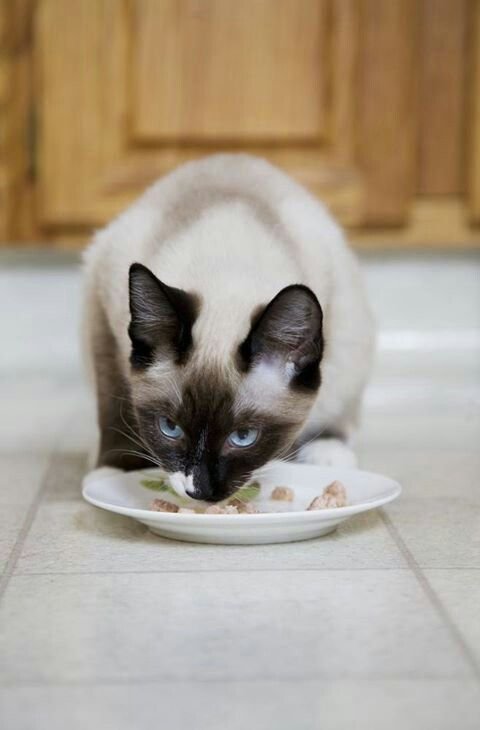
Wet food provides:
- Higher moisture content to support hydration
- Soft texture that’s easy for young kittens to chew
- Strong aroma that encourages picky eaters
- Fewer carbohydrates in many formulas
Dry Food
Dry food offers:
- Convenience and longer shelf life
- Crunchy texture that may help reduce plaque buildup
- Easy portion control
- Cost-effectiveness
Many veterinarians recommend feeding a combination of wet and dry food to provide the benefits of both while giving kittens a varied diet.
Feeding Schedule by Age
8–12 Weeks
Feed your kitten four small meals per day.
At this age, kittens have tiny stomachs but high energy requirements, so frequent meals are ideal.
3–6 Months
Feed three meals per day.
Your kitten will continue growing rapidly and will remain extremely active.
6–12 Months
Most Siamese kittens do well with two to three meals daily.
As they approach adulthood, their growth begins to slow, but they still require kitten food until about one year of age unless your veterinarian recommends otherwise.
How Much Should a Siamese Kitten Eat?
The right amount depends on several factors, including:
- Age
- Weight
- Activity level
- Overall health
- The calorie content of the food
Always follow the feeding guidelines on your kitten food’s packaging as a starting point, then adjust portions based on your veterinarian’s recommendations and your kitten’s body condition.
Avoid overfeeding, as excess weight can lead to health problems later in life.
Fresh Water Is Essential
Your Siamese kitten should always have access to clean, fresh water.
Many cats prefer moving water, so a pet water fountain may encourage them to drink more throughout the day. Proper hydration supports kidney function, digestion, and overall health.
Healthy Treats
Treats can be useful for training and bonding, but they should only make up a small portion of your kitten’s daily calorie intake.
Good treat options include:
- Freeze-dried chicken
- Small pieces of cooked chicken
- Freeze-dried salmon
- Commercial kitten treats made with quality ingredients
Treats should be offered in moderation to avoid upsetting your kitten’s nutritional balance.
Foods to Avoid
Some human foods can be harmful—or even toxic—to cats.
Never feed your Siamese kitten:
- Chocolate
- Onions
- Garlic
- Grapes
- Raisins
- Alcohol
- Caffeine
- Xylitol (an artificial sweetener)
- Cooked bones
- Raw dough
Also avoid giving large amounts of milk. Although many people associate cats with milk, most kittens become less able to digest lactose as they grow, which can lead to digestive upset.
When to Switch to Adult Food
Most Siamese kittens are ready to transition to adult cat food at around 12 months of age.
Make the switch gradually over 7–10 days by slowly increasing the amount of adult food while reducing the kitten food. This gradual transition helps minimize digestive upset.
If your kitten has specific health needs, your veterinarian may recommend a different timeline.
Signs Your Kitten Is Eating Well
A well-fed Siamese kitten should have:
- Steady, consistent growth
- Bright, clear eyes
- A soft, shiny coat
- Plenty of energy and curiosity
- Firm, well-formed stools
- A lean but healthy body condition
If your kitten experiences poor appetite, persistent diarrhea, vomiting, or unexpected weight loss, consult your veterinarian promptly.
Frequently Asked Questions
Can Siamese kittens eat adult cat food?
Adult cat food does not provide the higher levels of nutrients growing kittens require. It’s best to feed a kitten-specific formula until your cat reaches about one year of age.
Should I feed wet food every day?
Yes. Many owners include wet food daily as part of a balanced diet because it supports hydration and adds variety. Whether you feed only wet food, only dry food, or a combination depends on your kitten’s nutritional needs and your veterinarian’s guidance.
How often should I feed my Siamese kitten?
Young kittens generally need three to four meals each day. As they mature, you can gradually reduce feeding to two meals daily.
Is grain-free food necessary?
Not necessarily. Many kittens thrive on diets that include grains. What’s most important is choosing a complete, balanced kitten food with high-quality animal protein. Grain-free diets should only be used when recommended by your veterinarian for a specific medical reason.
Final Thoughts
A healthy diet is one of the greatest gifts you can give your Siamese kitten. Feeding a complete and balanced kitten food, offering fresh water at all times, and following an age-appropriate feeding schedule will help your kitten grow into a healthy, active, and affectionate adult cat.
At Siamese Haven, we believe that proper nutrition is the foundation of lifelong health. By providing your kitten with quality food and regular veterinary care, you’ll give them the best possible start and enjoy many happy years together.